 Skip to content

By the Mi Negocio TOP editorial team · SEO review: Ulises Gochez · Updated November 16, 2026 · 6-minute read
A sales funnel is the path your customers follow from discovering you to buying and coming back. Every business has one, even if nobody ever drew it. We like to use it backwards: start from your sales goal and work out how many people you need at each stage. Below you will find the sales funnel stages, a small-business example and a planner.
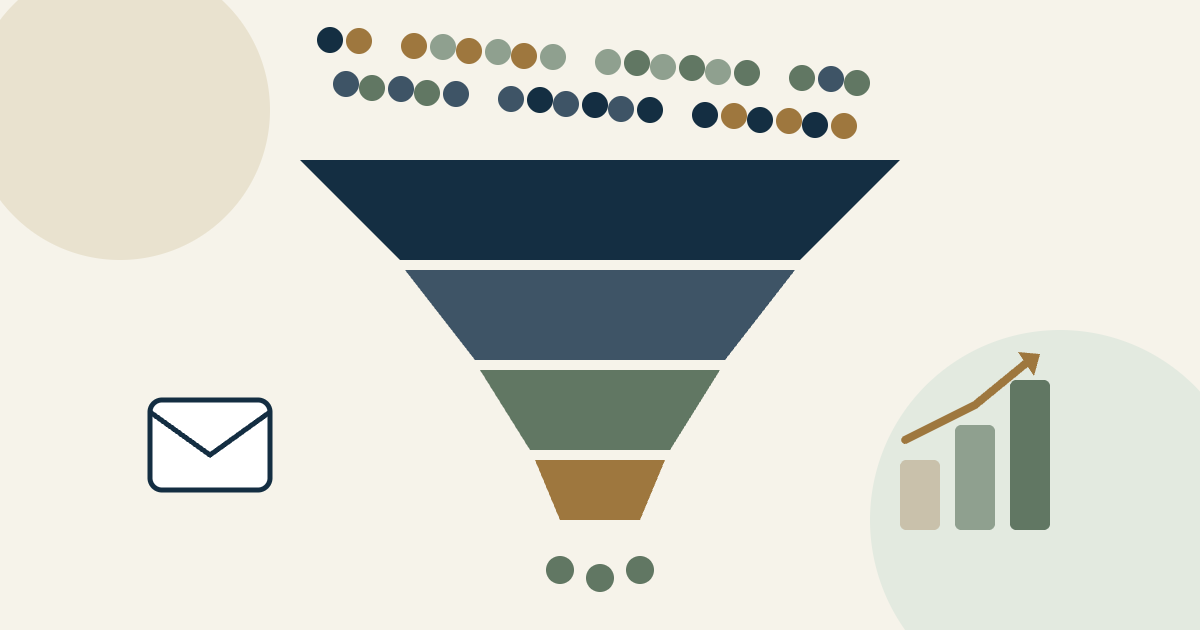
The sales funnel stages
| Stage | What happens | What to count | What to do |
|---|---|---|---|
| 1. Awareness | They see you for the first time | Profile views, site visits, foot traffic | Google Business Profile, social media, referrals |
| 2. Interest | They ask or follow you | Messages, calls, new followers | Reply fast with clear prices |
| 3. Consideration | They compare you | Quotes, appointments, trials | A concrete offer, reviews, a guarantee |
| 4. Purchase | They pay | Closed sales | Easy payment, on-time delivery |
| 5. Repeat | They return and refer you | Repeat customers | Follow-up, perks for returning |
Sales funnel example (illustrative)
A neighborhood salon reviews its month: 2,000 people saw its listing on Google Maps, 120 messaged or called, 60 booked and 45 showed up and paid. The problem was not at the top: half of those who asked never booked. With quick-reply messages and visible opening hours, that stage improved and sales grew without spending more on ads.
That is what a funnel is for: it tells you where customers slip away. If the gap is at the top, you need visibility; if it is in the middle, you need better service or a better offer.
Planner: how many people do I need for my goal?
Starting values are illustrative. Replace each rate with your own; if you do not know it, measure for a month.
How to build your sales funnel in one week
- Name your stages. Use your business’s words: “saw the window”, “messaged us”, “asked for a quote”, “paid”.
- Count each stage. Write down last week’s or last month’s numbers; three figures are enough to start.
- Work out the rates. Divide each stage by the previous one. The lowest is your bottleneck.
- Fix one stage only. One change at a time, so you know what worked.
- Measure again in 30 days. If the rate improved, move on to the next stage.
For a step-by-step diagnosis of where you lose customers, continue with why your business is not selling: a 30-day plan.
Frequently asked questions about sales funnels
What is a sales funnel?
It is the path a person follows from first discovering your business to buying and coming back. It is drawn as a funnel because fewer people remain at each stage: many see you, some ask and a few buy.
What are the stages of a sales funnel?
The most common are five: awareness, interest, consideration, purchase and repeat purchase. You can merge or rename them for your business; what matters is being able to count how many people are in each.
Does a small business need a sales funnel?
Yes, even if you do not call it that. You already have one: people who see you, ask and buy. Putting numbers on it tells you whether you lack people at the top or are losing them in the middle, and each problem has a different fix.
Do I need software to build a sales funnel?
Not to start. A spreadsheet where you log visits, messages, quotes and sales each week is enough. A CRM helps once you handle many leads at the same time.
What is a good conversion rate?
It varies a lot by industry, price and channel, so there is no universal figure. Compare yourself with yourself: measure for a month, improve one stage and measure again.